
Jackson County prosecutor shares concerns about Missouri self defense law with state AG, police board



Missouri's self-defense law, a lawsuit against Kansas City, and the new congressional maps are among the issues Attorney General Catherine Hanaway addressed Tuesday.
Hanaway briefly spoke and attended the Kansas City Board of Police Commissioners meeting.
During the meeting, Hanaway listened as Jackson County Prosecutor Melesa Johnson told the board about her office's issues with Missouri's self-defense law.
"It is absolutely a public safety issue," Johnson said.
Johnson's concerns about the law surfaced publicly due to the fallout from the Chiefs Parade shooting in 2024.
According to the law, a person can respond with lethal force based on a reasonable belief of danger or in response to an attack.
In March, Dominic Miller walked out of Jackson County Court after pleading guilty to an unlawful use of a weapon charge for his role in the parade shooting.
A grand jury indicted Miller for murder and three other charges.
Court records show a bullet from Miller's gun was found in Lisa Lopez-Galvan's body.
She was killed in the mass shooting, which injured 25 people, including children.
But Johnson decided a plea deal with Miller was her only choice.
"We will not pursue charges we cannot prove just to make a statement," Johnson said in March.
Terry Young, another Chiefs Parade shooter, received a similar deal in April.
On Tuesday morning, Johnson told the police board the state's self-defense law is a growing problem.
In July alone, Johnson said her office declined to prosecute 12 cases because of the law.
Overall, her office has declined to prosecute 46 cases so far this year.
Last year, it was 57 cases.
Prior to Johnson's arrival, the Jackson County Prosecutor's Office declined to prosecute 22 cases in 2017, the year after the self-defense law went into effect.
"The Chiefs parade. That has caused all of us, I think, in law enforcement, to take a look at the use of force statute," Hanaway said.
"I know that she cares about public safety, more specifically violent crime. And so, I look forward to engaging in these productive discussions on the horizon," Johnson said about Hanaway.
Johnson also said the cases she's declined to prosecute don't include the ones her office has lost at trial due to Missouri's self-defense law.
Hanaway also addressed her lawsuit challenging Kansas City's Women and Minority Business Enterprise Preference Program for government contracts.
"We are dropping our motion for a preliminary injunction. Because the city council did change the law. But we want to make sure that that change is permanent,” she said. "We claim that this program was discriminatory. And as a result, price and quality weren't the driving factor in all contracts."
Earlier this month, business leaders spoke to the city council members when they decided to scrap the program and create a new one.
"The businesses affected by these decisions are not just companies on paper. They're employers responsible for supporting families, creating jobs, developing talent and contributing to the economic strength of Kansas City," said Joe Davis, CEO of Custom Engineering.
While the city has dropped its program, the lawsuit is ongoing.
The suit names Chuck Cacioppo as a plaintiff.
His company, Industrial Salvage & Wrecking has done demolition work for the city.
When asked if she has other business victims, Hanaway replied, "Undoubtedly."
For that reason, Hanaway has not set a goal for any potential monetary damages.
The attorney general has also been defending state lawmakers' changes to Missouri's congressional map.
That map has been challenged with several lawsuits.
Hanaway said voters should feel confident the map changes will stand.
"The districts they voted on in the primary will be the districts for the general election. No court in any state, anywhere in the country, has changed the maps between the primary election and the general election. And there have been a lot of cases, but we've won every single one of them," she said.


Top Picks
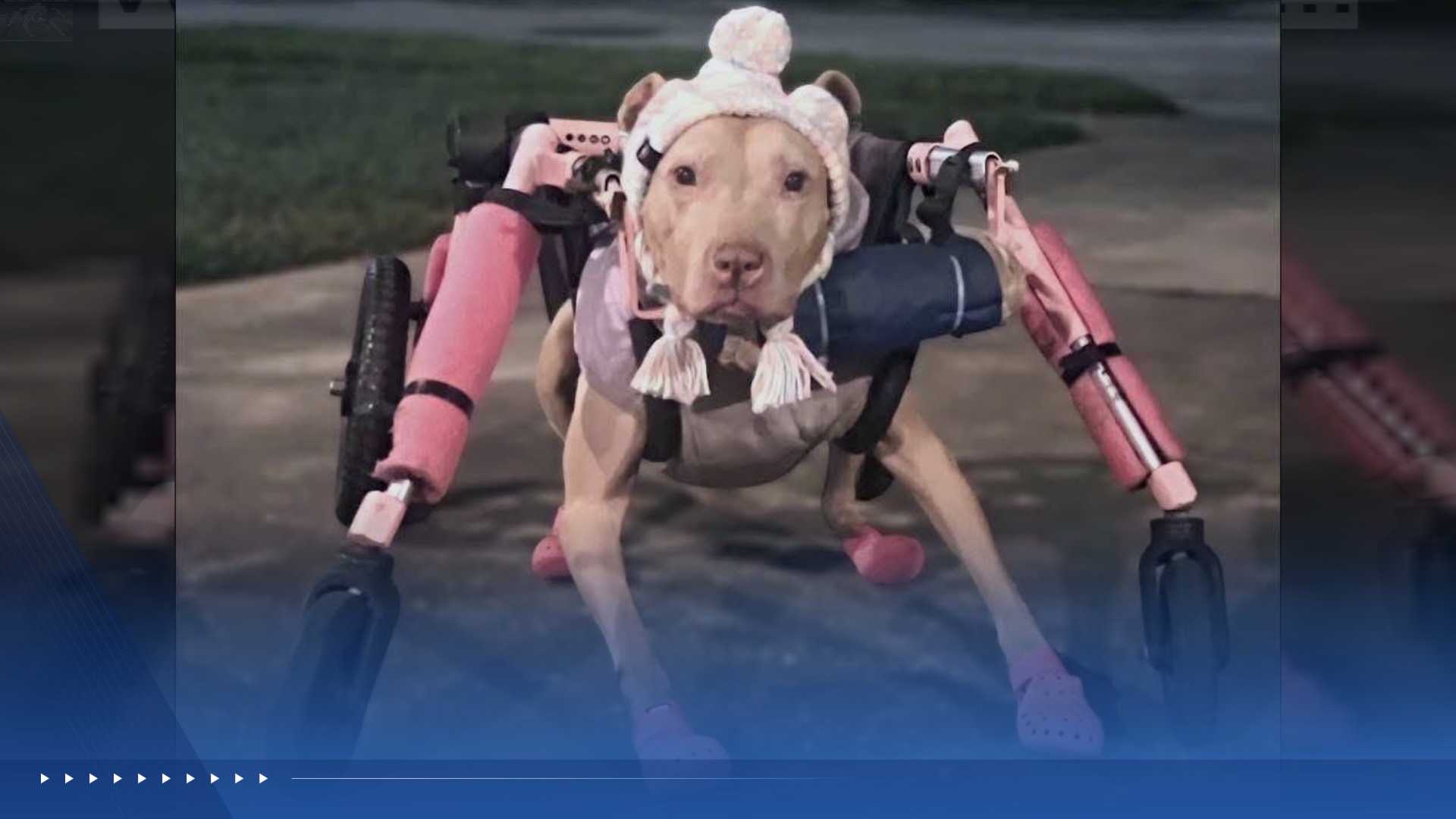
A dog's customized pink wheelchair worth $800 was stolen. An organization stepped in to replace it

Scammers are impersonating MyChart. Here’s how to spot them

'Liquid concrete': Why living downstream from a glacier has become a deadly liability